05 // PROJECT SELENE: LUNAR DEPLOYMENT CLASS
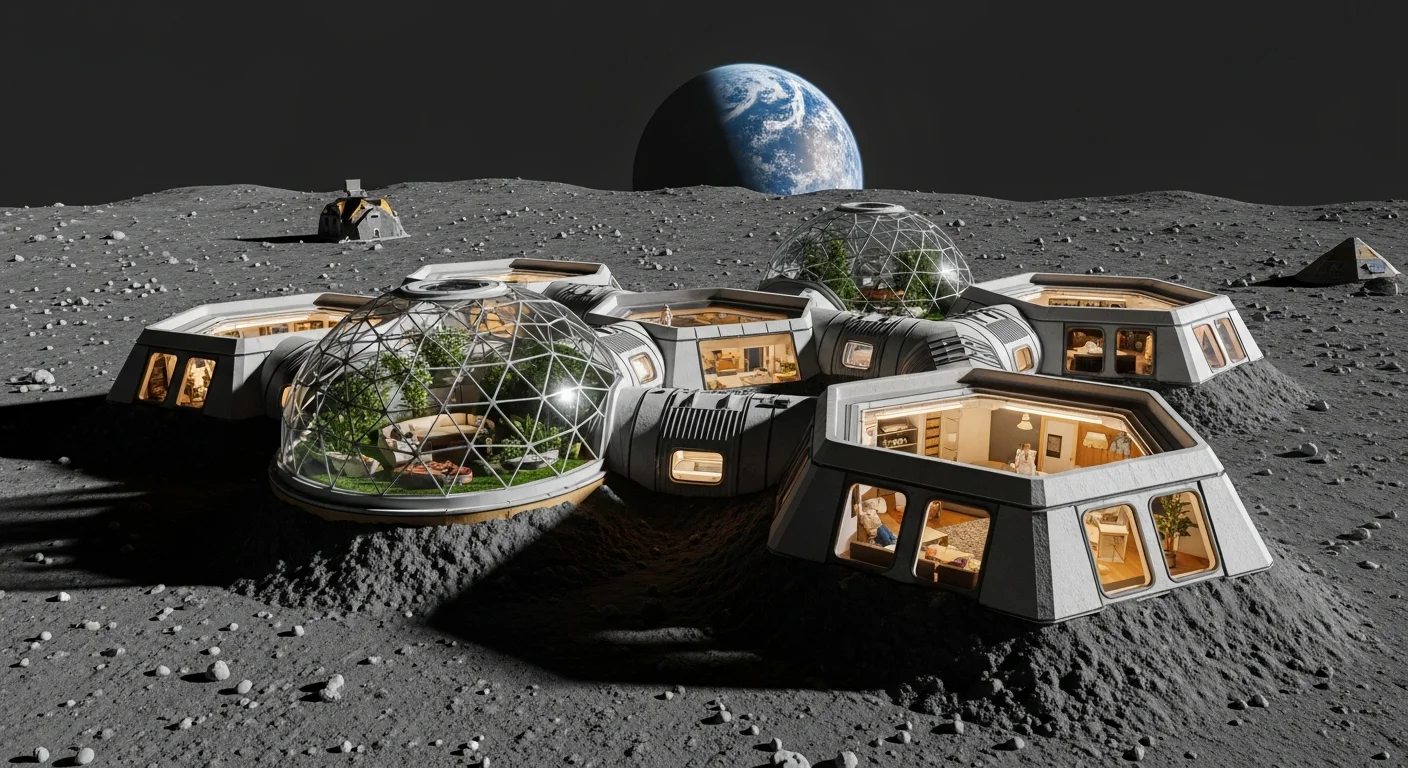
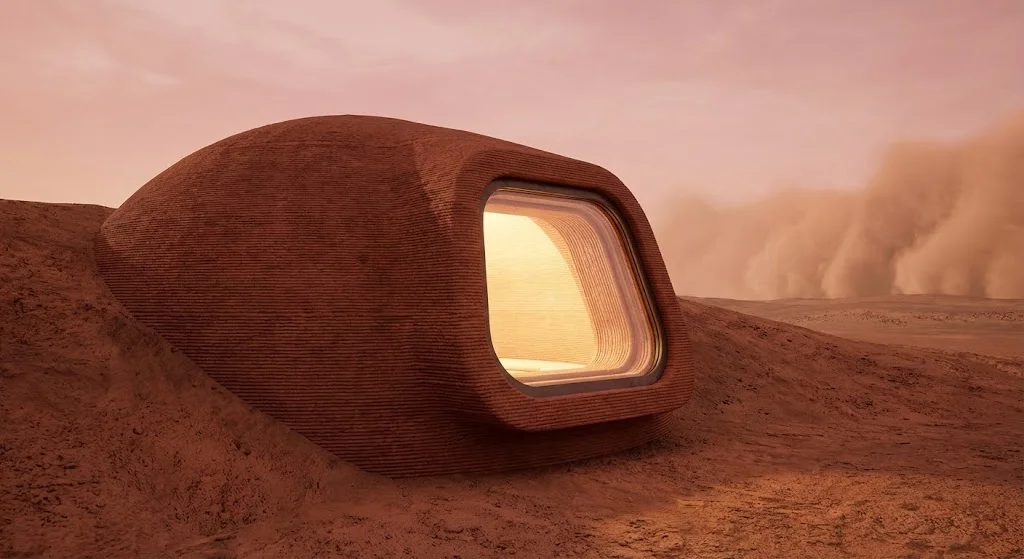
ISRU SINTERED REGOLITH STRUCTURE
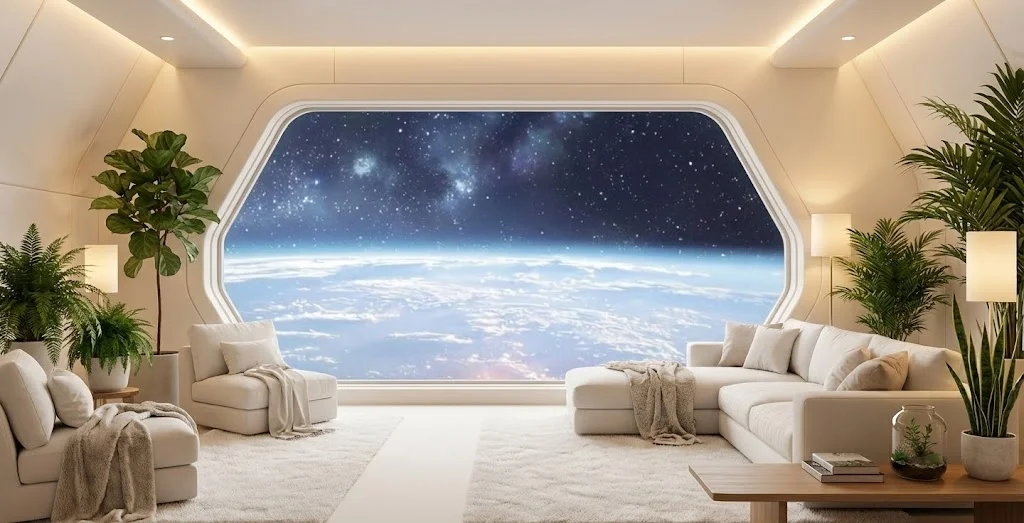
EXPANDABLE PRESSURE VESSEL — TRANSIT
Project Selene is the lunar deployment class. The architecture builds into the lunar subsurface rather than on top of it, using natural lava tubes as pressure containment and in-situ regolith as structural material and radiation shielding.[15]
The location: Marius Hills Lava Tubes. Billions of years of lava flow carved tunnels under the lunar crust — some exceeding 1 km in width, large enough to contain a small city. Temperature: constant −20°C (manageable with standard thermal systems). Radiation: effectively zero beneath 50 m of basalt overburden. Micrometeoroid flux: zero. The tube provides pressure containment, thermal buffering, and radiation shielding that would require tens of thousands of tons of imported material to replicate on the surface.
The seal. Foundation Kinetics robotic systems descend through a skylight opening and seal it with Kevlar-aerogel plug material. A massive Metallic Sciences titanium iris becomes the primary airlock. Maxwell Continuum collimated laser systems sweep the interior walls, melting regolith into smooth obsidian-like glass — an airtight ceramic lining formed from the moon itself. No imported concrete. No formwork. The structure is the geology.[16]
The light. Metallic Sciences mirror arrays on the surface track the sun and beam it through fiber-optic conduits into the tube interior. The light can be focused for crop growth or diffused to simulate overcast daylight. In the 14-day lunar night, Maxwell Continuum full-spectrum emitter arrays maintain the circadian light schedule without interruption.
Lunar regolith contains helium-3 implanted by four billion years of unshielded solar wind exposure. Foundation Kinetics harvester rovers heat the regolith to approximately 600°C; the He-3 volatilizes and is captured. Helium-3 is among the most energy-dense aneutronic fusion fuels known. A single shuttle payload could fuel a medium-scale fusion reactor for a year.[17]
Lunar regolith is approximately 45% oxygen bound in silicate and iron oxide minerals. Molten salt electrolysis splits the oxides: oxygen for breathing and rocket oxidizer, waste metals (iron, aluminum, titanium) for Metallic Sciences Four Foundries to feed into additive manufacturing. The colony does not import air. It mines it.
A 20 km Highfield Magnetics linear electromagnetic accelerator laid flat on the surface. Load a He-3 canister. Accelerate to 2.38 km/s (lunar escape velocity). A capture facility in Earth orbit receives the payload. Export cost per kilogram: effectively the energy cost of electromagnetic acceleration, which on a solar-powered lunar surface approaches zero marginal cost.[18]
Life support is a closed cycle. Water ice mined from permanently shadowed craters at the lunar poles feeds through purification and recycling at 100% recovery. Cellular Foundry algae bioreactors lining the tube walls scrub CO₂ and produce protein biomass. Electrostatic dust barriers from Highfield Magnetics repel abrasive lunar regolith particles from every suit and airlock surface.
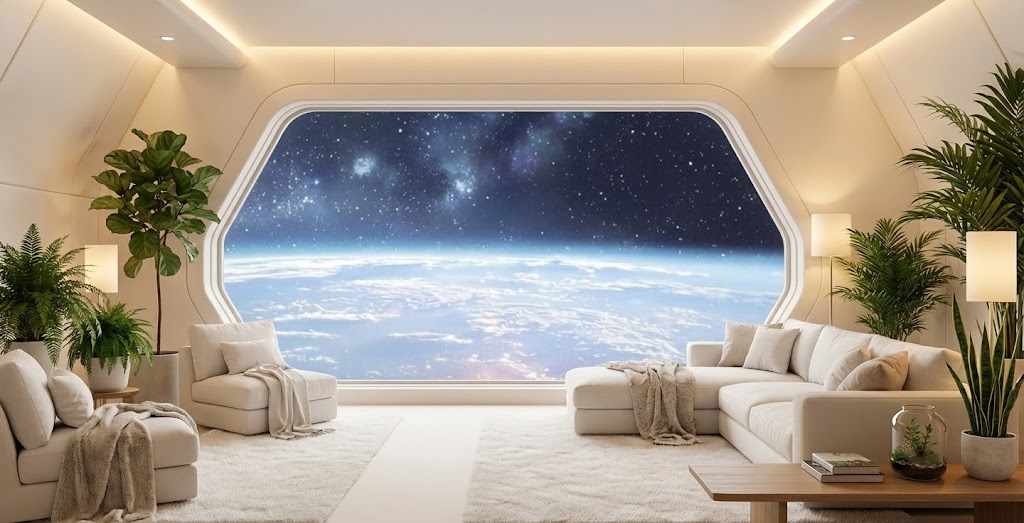
The psychology. The ceiling of the pressurized tube, tens of meters overhead, carries a full Maxwell Continuum emitter array projecting a realistic sky — moving clouds, correct solar position, stars at night — at precise surface lux and color temperature. Plant walls in every residential section provide the smell of wet soil and the visual texture of growing things. The most critical life-support system in any isolated habitat is not oxygen. It is the prevention of psychological deterioration.[19]
OUTPOST
Research Station — Population 50
Single sealed lava tube segment. Mining and geological survey operations. Solar and battery power. The initial installation from which all subsequent expansion proceeds.
REFINERY
Industrial Colony — Population 500
Multiple connected tube segments. Mass driver operational. He-3 export and vehicle refueling. Stellar Furnace fission power plant.
SETTLEMENT
Permanent Colony — Population 1,000+
Multiple interconnected pressurized tubes with internal transit, agricultural zones, centrifuge facilities for bone-density maintenance, and full closed-loop life support. Advanced fission or fusion power. A multi-decade development objective requiring incremental expansion from the Outpost and Refinery stages.