Modular Habitats
THE HOME IS A VERB
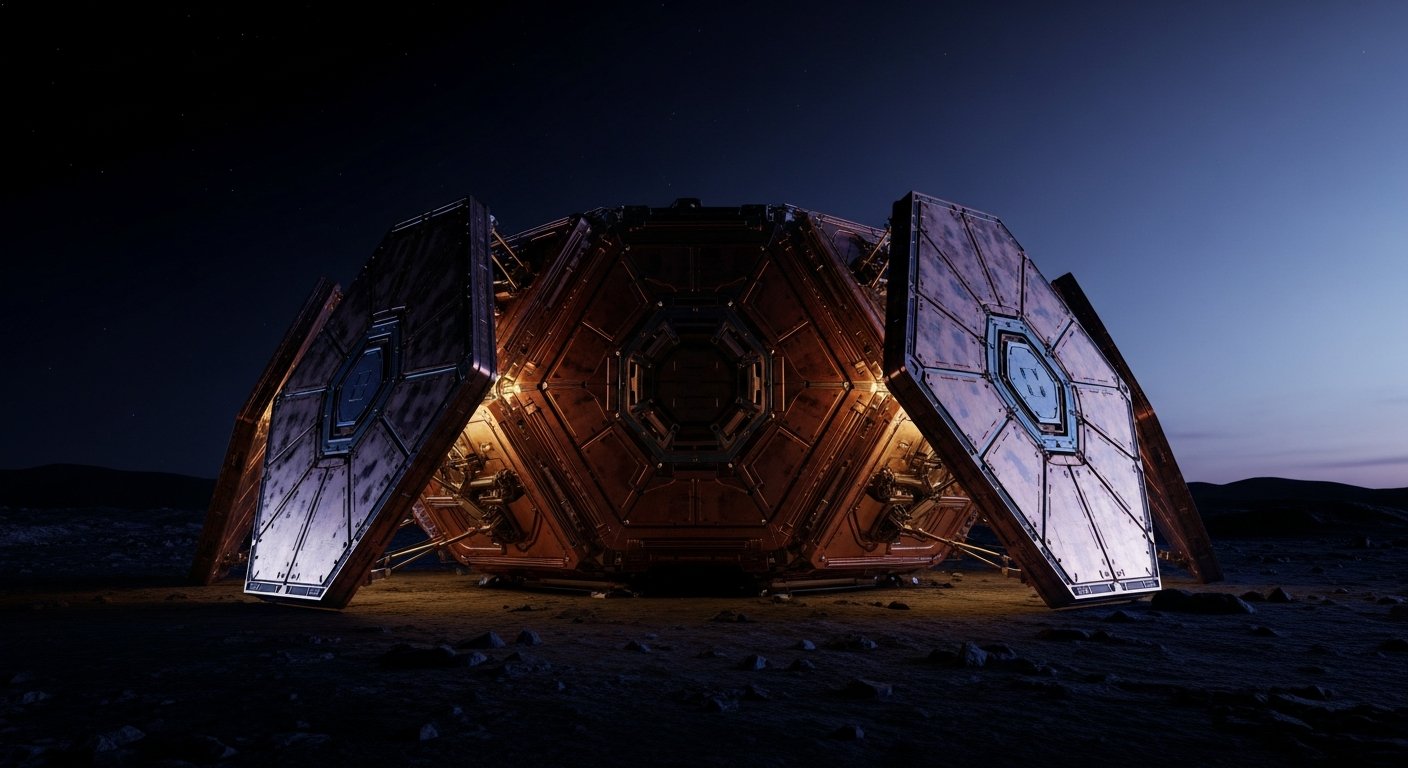
For 10,000 years, a "house" has been a pile of dead rocks arranged to keep the rain off. It is dumb. It wastes energy. It accumulates dust. The Static Box is dead. We built what comes after.
Modular Habitats treats the home as an Exoskeleton for the Family. It is an active participant in your life. Psychologically, it manages your serotonin and dopamine via light and sound. Physiologically, it manages your oxygen, nutrition, and sleep cycles. Physically, it cleans itself, repairs itself, and defends itself.
We don't sell "Real Estate." We sell Life Extension Environments.
And we don't stop at the city limits. The same philosophy that builds a self-healing apartment in Tokyo builds an underwater palace in the Maldives, a lunar colony in a lava tube, and a civilization carved inside a mountain of solid granite. If humans need to live there, we make it not just survivable but beautiful.
01 // THE ARCHITECTURE: THE HEX-CELL
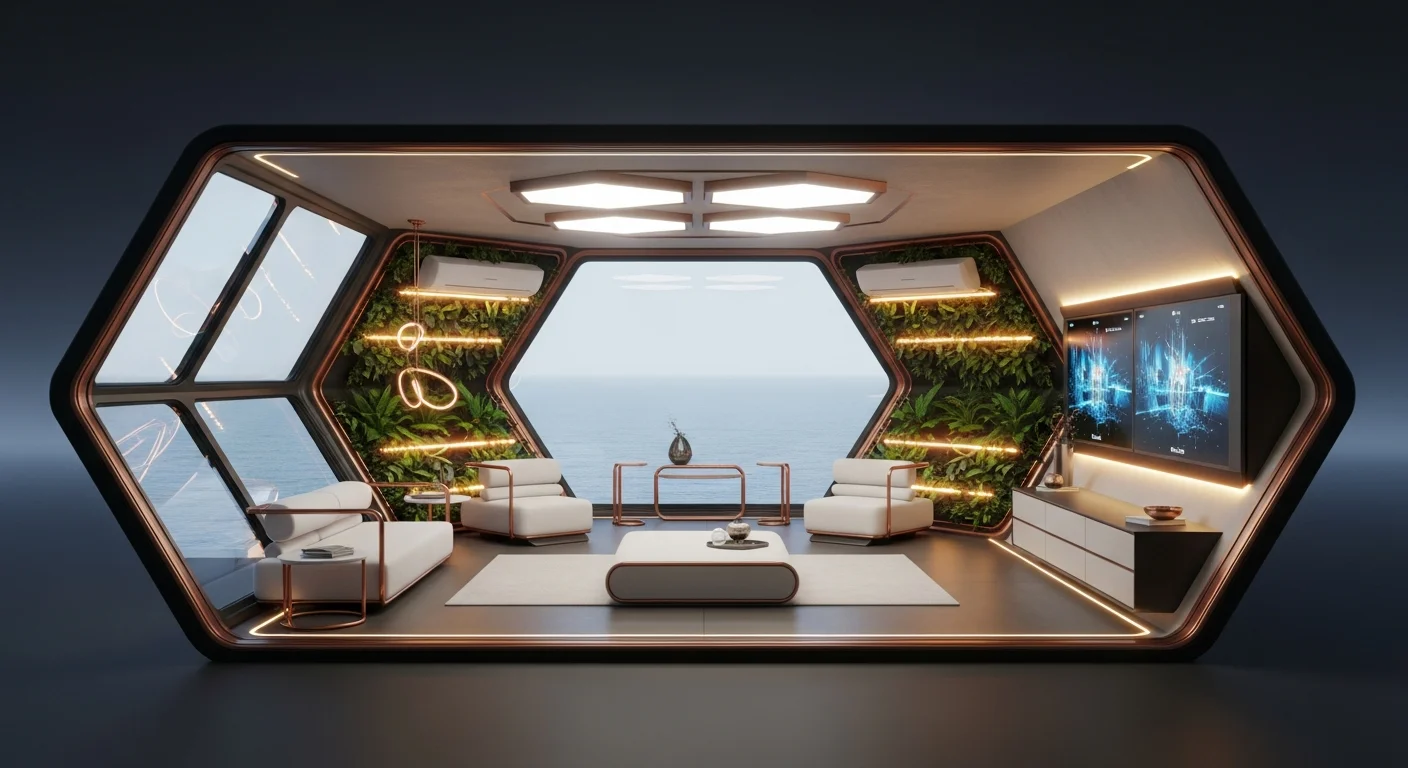
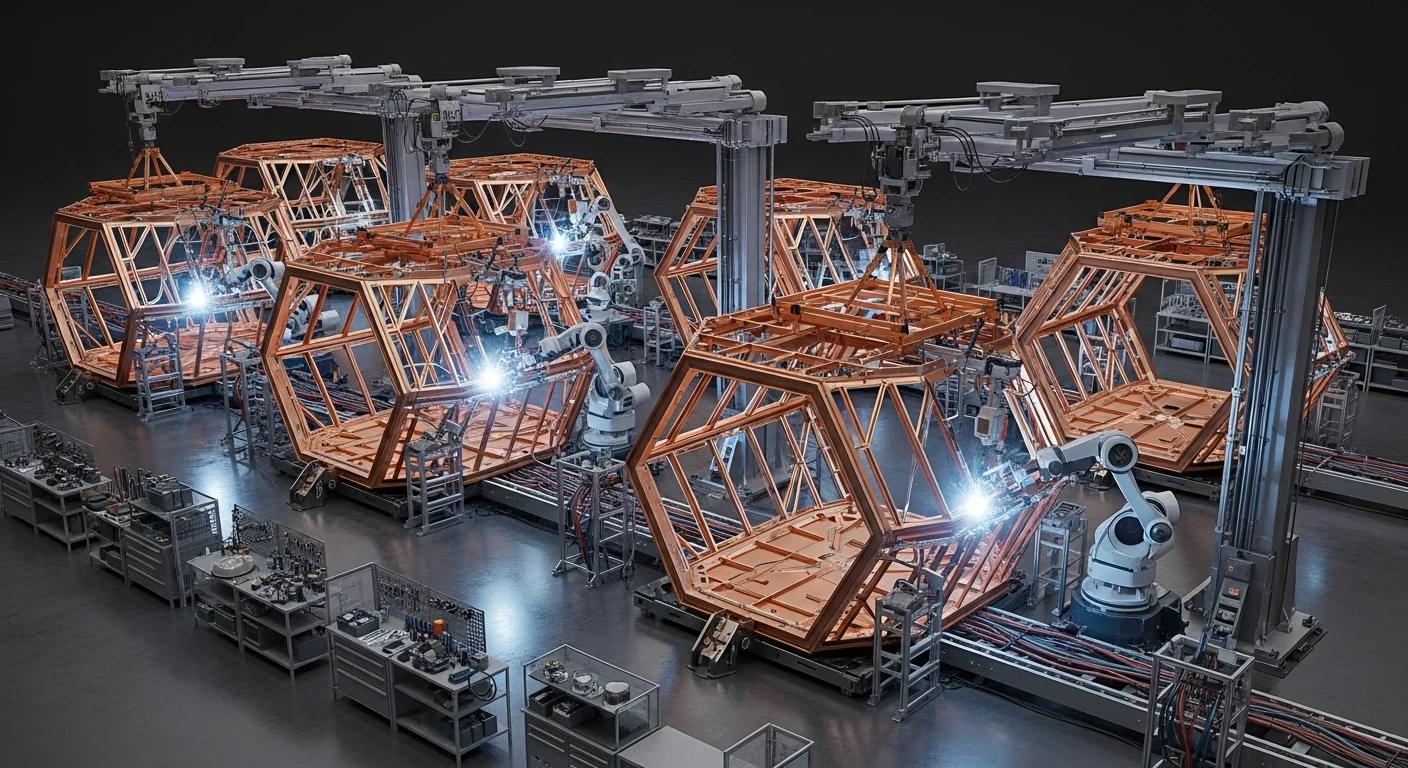
We reject the box. Corners trap dead air. We utilize the Hexagon—nature's perfect geometry.
The Material: "Laks-Foam"
The walls are not wood or drywall. They are 3D-printed Titanium-Aerogel Composite from Metallic Sciences. R-Value: infinite (vacuum insulated). Strength: bulletproof. Weight: it floats on water. Every structural panel is a sandwich of monocrystalline titanium skins over aerogel vacuum core—the same thermal isolation technology that shields re-entry capsules, now holding your coffee warm.
The Assembly
Foundation Kinetics "Atlas" bots stack hex-cells like LEGO bricks. A 5,000 sq ft villa is assembled in 24 hours. No sawdust. No nails. No concrete trucks blocking the road. The robots arrive on a flatbed, unpack the cells from their shipping containers, and click them together with sub-millimeter precision. By morning, you have a sealed, climate-controlled structure that could survive a Category 5 hurricane.
02 // PROJECT CARBYNE WEAVER: THE INSTANT SKYSCRAPER
The Hex-Cell conquers the horizontal. For the vertical, we reject the crane entirely. For five thousand years, construction has been defined by compression—stacking heavy materials on top of one another, fighting gravity every inch. Concrete takes 28 days to cure. Steel requires massive smelting and hoisting. A 100-story building is a five-year project. In an era of exponential population growth, five years is too long.
Project Carbyne Weaver moves from the Age of Compression to the Age of Tension. The IS-100 is a 100-story superstructure that deploys, erects, and becomes habitable within 24 hours. This is not construction. This is inflation.
The Material: Carbyne
An allotrope of carbon consisting of alternating single and triple bonds (−C≡C−). Tensile stiffness: 10⁹ N·m/kg—twice graphene, vastly superior to diamond. Young's Modulus: 32 TPa. We do not mold beams. We weave cables. Automated nanoscale looms braid individual carbyne chains into macro-cables—flexible as silk, with a breaking strength capable of tethering a space elevator. In its dormant phase, a collapsed 100-story tower fits inside a standard 40-foot shipping container.
The Structure: Macro-Tensegrity
The IS-100 is not a stack of floors. It is a biological system. The "beams" (compression members) do not touch each other. They float in a continuous sea of carbyne cables (tension members). During an earthquake, it does not crack—it vibrates like a plucked guitar string, dissipating energy through the molecular lattice. A catastrophic impact distributes force across the entire 100-story mesh instantly: a planetary-scale bulletproof vest.
The 24-Hour Ascent
HOUR 02–12: The Breath. Mylar bladders inflate with helium. Because the carbyne mesh weighs 1% of steel, buoyancy lifts the structure. The mesh unspools from the container like a geometric flower blooming in fast motion.
HOUR 12–20: Floor plates—origami-folded aerogel composites—unfurl and lock into tension rings at every 4 m interval.
HOUR 20–24: The Lock. Hollow carbyne tubes flooded with Metastable Metallic Hydrogen. Internal pressure turns flexible cables into rigid superconductors instantly. Helium bladders deflate. The building is self-supporting.
The Building as a Battery
Metallic Hydrogen is predicted to be a room-temperature superconductor at 290 K. The entire IS-100 skeleton has zero electrical resistance. We induce direct current through the structural columns; it circulates indefinitely with no loss. A 100-story tower utilizing its full structural mass for Superconducting Magnetic Energy Storage can hold approximately 500 MWh—enough to power itself and the surrounding neighborhood for weeks during a blackout. The building is not connected to the grid. The building is the grid.
Interior walls are electro-active polymers—reconfigurable via app. The cladding is transparent aerogel composite requiring 90% less HVAC than glass. And because the IS-100 fits on a container ship, we can deploy a skyline to a disaster zone, a military outpost, or a Mars colony in weeks. The carbyne spooling and metallic-hydrogen rigidification technology is the exact technology required to tether a Space Elevator. The IS-100 is not just a product. It is the prototype for the stairway to the stars.
03 // THE SYSTEM: THE LIVING HOUSE
This is how we integrate the entire Laks ecosystem into a single room.
Artificial light ruins human sleep. The windows are not glass—they are Transparent Aluminum from Metallic Sciences, layered with Maxwell "Vision" emitters. Day Mode pumps blue-enriched light (480 nm) to spike cortisol. Night Mode eliminates all blue, shifting to deep amber. The "View": if you live in a rainy city, the window projects a live parallax-corrected beach in 4K. It looks real.
Indoor air is toxic—CO₂, dust, VOCs. The house breathes. Vapor Vacuum pumps pull air through a Phase Flash Cold Trap that freezes out pollen and viruses instantly. Matter Kitchen "Aero-Shot" technology injects customized scents: espresso & ozone in the morning, lavender & woodsmoke in the evening. The house maintains a slightly elevated O₂ level (22%) to keep your brain sharp.
The house floats. The foundation uses Highfield CRYO-10 maglev pads to hover the structure 10 mm off the ground. Earthquakes are ignored. Trucks driving by are ignored. Acoustic Anti-Wave Generators in the walls cancel the sound of the neighbors. Recording-studio silence in every room.
The bed is not a mattress. It is a Variable-G Suspension Field from Highfield. You float. Embedded Brainwave Sensors track your REM cycle. No alarm clock—the room gently vibrates (Haptic Wake) and slowly brightens the lights when you are in the lightest phase of sleep. You wake up perfectly refreshed every time.
04 // THE HEARTH: MATTER KITCHEN INTEGRATION
No fridge. You don't store food—it rots. A bank of MK-Chef printers lines the wall unit, assembling meals molecule by molecule from sealed feedstock cartridges. An Oasis-Home unit recycles the shower water into 9N pure drinking water. There is no trash can. Waste drops into the Flash-Chute—instantly vaporized by a Maxwell laser, the carbon captured, the heat routed to the dishwasher.
05 // PRODUCT LINE: CELL / ESTATE / CITADEL
Target: High-density cities (Tokyo, New York)
Size: 400 sq ft (Single Hex)
Concept: "The Transformer." The space is small, so the furniture is robotic (Foundation Kinetics). Day Mode: bed retracts into ceiling, desk folds out. Party Mode: desk vanishes, walls shift color. Subscription model pricing.
Target: Families
Size: 3,000 sq ft (7-Hex Cluster)
Concept: "The Sanctuary." Central atrium hex with a living biological garden (Cellular Foundry). Garage houses a Stellar Furnace "Campfire" reactor for off-grid power and a charging pad for the Lorentz "Pill" car.
Target: Total self-sufficiency, any location
Size: Variable
Concept: "The Fortress of Solitude." Antarctica, deep desert, underwater. Power: Antimatter "Ember" Core (50-year runtime). Food: Cellular Foundry bioreactors in the basement. Defense: Maxwell H-Array microwave denial on the roof. Highfield Mega-Shield against solar flares and mortars.
06 // THE MAGIC: PSYCHOLOGICAL ARCHITECTURE
Subliminal optimization. The house doesn't just shelter you. It reads you.
The "Mood" Wall
The house listens to your voice tone via Aetheric AI. If it detects anger, it subtly cools the air by 2°C and shifts the lighting to calming teal. If it detects lethargy, it increases oxygen saturation and plays imperceptible 40 Hz binaural beats to stimulate focus. You never notice. You just feel better.
The "Invisible" Maids
You never see the cleaning. When you leave for work, Foundation Kinetics "Scarab" drones swarm from the baseboards. They scrub, vacuum, and polish. By the time you return, the house is pristine. You live in a hotel that never presents a bill.
07 // THE SHOWCASE: THE JAPAN NODE
Technology must bow to culture. Every Laks system is invisible by design—but nowhere is that philosophy tested more rigorously than in Japan, where a 600-year-old carpentry tradition considers a visible screw an obscenity. The Japan Node is our proof: two estates where Hex-Cell structure, Maxwell Circadian Shell, and Phase Flash atmospheric control vanish entirely behind hinoki wood, hand-forged iron, and borrowed moonlight.
Kaimori Estate — Kamakura-yama ("Ocean Forest")
The Location: Kamakura-yama is an exclusive residential ridge developed in the 1930s for the aristocracy, winding through cherry blossoms and ancient pine at ~100 m elevation. Below: Sagami Bay. Beyond: Mt. Fuji on clear mornings. Fifteen minutes downhill: Kencho-ji and Engaku-ji, the oldest Zen training monasteries in Japan. You live between the ocean and eight centuries of silence.
The Architecture: Modern Sukiya-style compound on a former nobility plot. The bones are Hex-Cell—but you will never know. Exterior: Hinoki (cypress) post-and-beam over Yakisugi (blackened cedar) siding, floor-to-ceiling glass walls that slide away entirely, dissolving the boundary between room and forest. The structural panels are Laks-Foam Ti-Aerogel hidden behind traditional plaster and wood cladding. Earthquake isolation: Highfield CRYO-10 maglev pads buried beneath the foundation stones. The house floats on a magnetic field, but the garden gate is 400-year-old iron.
A massive hinoki veranda cantilevered over the slope on Foundation Kinetics carbon-fiber I-beams, invisible beneath the wood. The treehouse feeling: you hover above the canopy with the ocean sparkling below. Maxwell Circadian Shell glass tints imperceptibly with the sun—no blinds, no mechanisms, just light that feels exactly right.
We bore 1,000 m into the volcanic geology to tap the local hot spring source. The bath: an infinity pool of black granite, open to the forest air, smelling of pine and sea salt. Phase Flash Cold Trap filters maintain perfect mineral balance while removing sulfur odor. The water is 42°C. The stars are free.
Borrowed Scenery. We don't plant flowers. Moss, volcanic rock, and Japanese maples blend seamlessly into the wild mountain forest behind, erasing the property line. Cellular Foundry Rhizo-Mesh beneath the moss accelerates growth 3×. Within one season, the garden looks like it has existed for a hundred years.
Sushi Access: Sagami Bay fishing ports deliver morning catch to your kitchen—Sushi Masa and Kiyota in Kamakura for Edo-style perfection. When you want the absolute best in the world, your driver takes the Yokohama-Yokosuka Road. You are in Ginza in 55 minutes. You eat at Sushi Yoshitake, then retreat to your silent forest before midnight. Access: Yokohama Heliport (15-minute Maybach transfer) or the Green Car on the JR Yokosuka Line—quiet, efficient, gliding through the suburbs.
Tenku-no-Mori — Ise-Shima ("Forest in the Sky")
The Location: Ago Bay, Ise-Shima National Park. The spiritual heart of Japan. A "Rias Coastline"—jagged, saw-toothed mountains crashing directly into calm dark-blue water dotted with sixty small islands. The hills are covered in Ubame Oak and Japanese Black Pine. This is where the Emperor goes to commune with the gods, where the G7 convened, and where the Ama—traditional female free-divers—still hunt abalone by hand. There are no power lines, no neighbors, no noise. Only Black Kites circling and wind in the pines.
The Architecture: Modern Ryokan on a private peninsula overlooking the bay. Low-slung, single-story pavilions connected by wooden walkways that float above the forest floor, protecting the moss beneath. Materials: unvarnished cypress, granite, and Washi paper screens. The entire ocean-facing wall is Maxwell Smart-Glass—transparent, self-tinting, hurricane-rated. You look down from the mountain onto the pearl-diver rafts floating in the bay below. It is absolute silence.
Not a tub—a temple. Black basalt infinity pool fed by mineral-rich hot springs, cantilevered over the cliff edge on concealed Metallic Sciences Ti-beam. Phase Flash thermal regulation holds 41°C regardless of season. You soak at the edge of the sky.
A separate small wooden structure built deep in the woods, disconnected from the main house. No electricity. No glass. Washi screens filter forest light into a single tatami room. Twenty minutes from Ise Jingu—the most sacred shrine in Shinto—with private Kagura-den access for VIP blessings away from the public.
The Food — Miketsu-kuni ("Land of Imperial Provisions"). Mie Prefecture is where the Emperor's food was historically sourced. Ise Ebi: the world's most prized spiny lobster, from the water you are looking at. Matsusaka Beef: the most revered Wagyu (locals consider Kobe an imitation). Abalone: hand-dived by Ama women just for you. A retired Ginza master lives on-site in the staff quarters. He has first pick of the catch at the local port every morning at 4:00 AM. Access: Chubu Centrair helicopter (25 minutes to your private ridge) or the Shimakaze—a luxury limited express with private cars and panoramic windows from Osaka direct to the coast.
08 // PROJECT AQUALIS: THE UNDERWATER PALACE
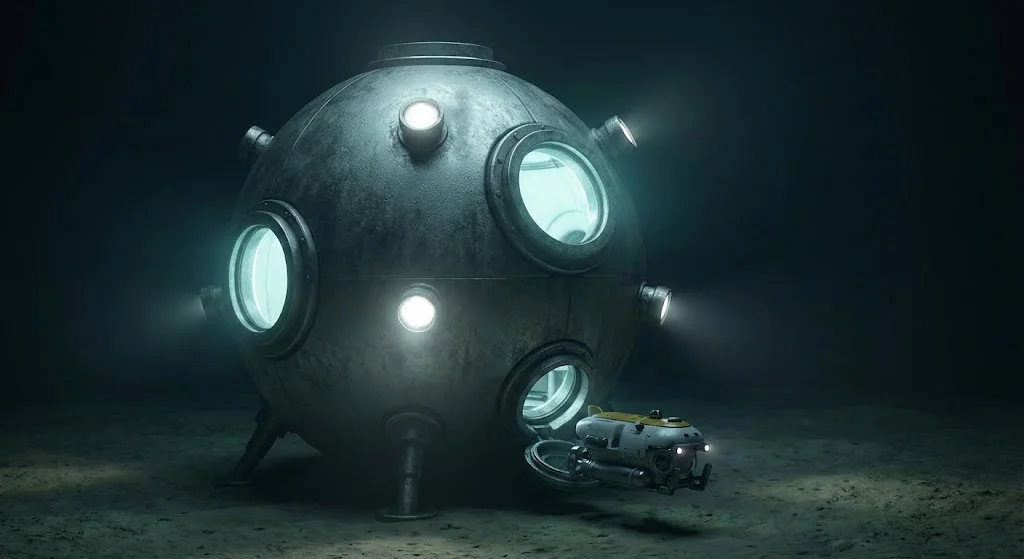
AQUALIS SYNTACTIC SPHERE — RATED TO 10,900 M DEPLOYMENT DEPTH
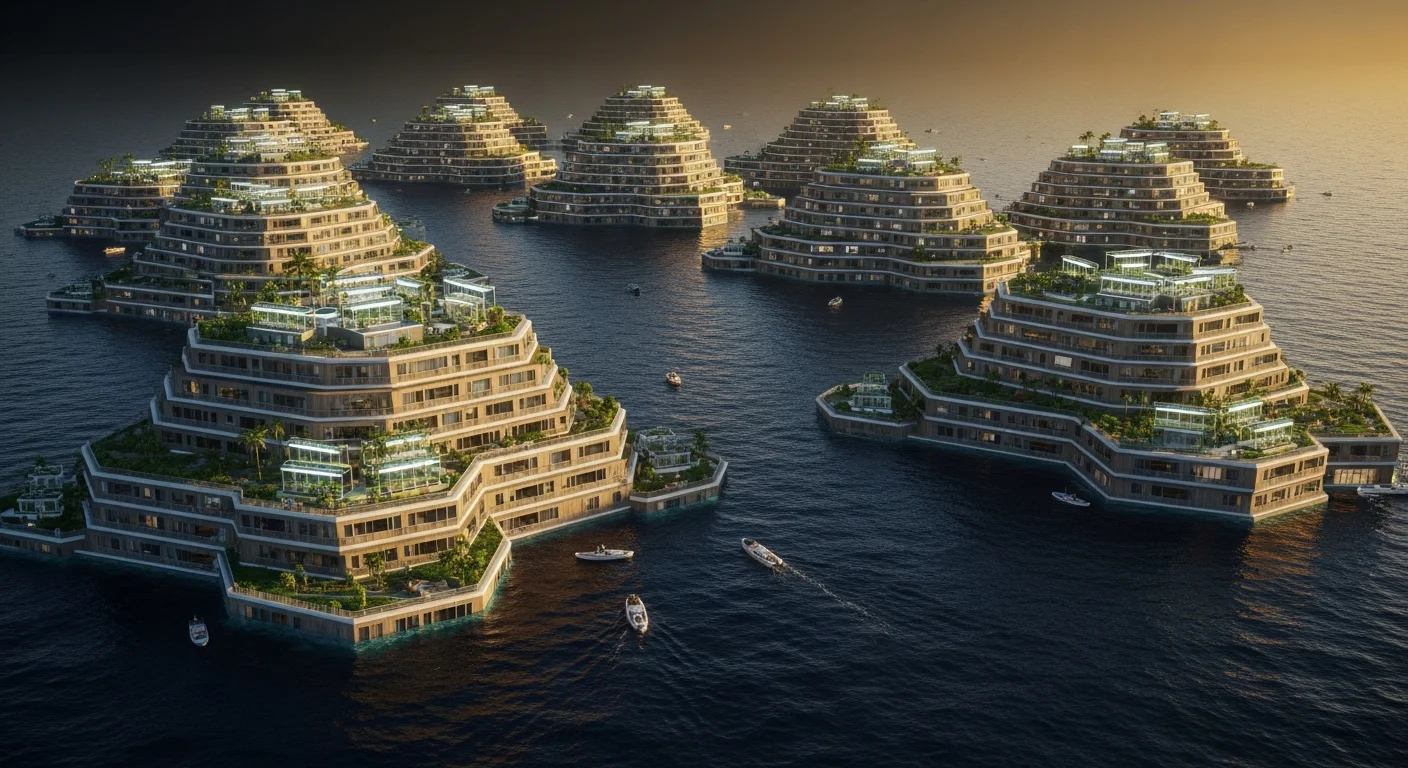
We have conquered the land. Now we conquer the ocean. Not a cramped submarine that smells like diesel—an Inverted Aquarium. The goal: place the human in the center of the most vibrant ecosystem on Earth without destroying it. The palace heals the reef around it.
The Hull: "The Diamond Bubble"
You asked for a palace. That means glass. The material is Laks-Clear—Transparent Polycrystalline Alumina (ALON) grown in zero-gravity by Metallic Sciences. Compressive strength of sapphire. At 100 m depth the water pushes 145 psi; this material laughs at 145 psi. Refractive index matched to seawater (n ≈ 1.33): the wall disappears. No distortion. You feel like you are floating in the water, but you are dry.
Foundation Kinetics "Weaver" bots spin a Titanium-Nanotube Voronoi Lattice—like dragonfly wings—and the glass panels seat into it. If one panel cracks, the lattice isolates the failure. The palace never floods. Maxwell "Soliton" UV-C femtosecond pulses vaporize algae and barnacle larvae every hour. The glass stays crystal clear forever.
The Foundation: "The Reef Healer"
We do not drill into the coral. The palace floats, tethered to three silent piles in dead bedrock by Highfield Mag-Lev Cables with active storm damping. The hull is coated in Bio-Active Substrate—low-voltage electricity drives Biorock accretion, precipitating calcium carbonate from seawater. Coral grows 5× faster on the palace than in the wild. Within six months, the titanium struts are covered in vibrant purple and orange coral. The palace becomes part of the reef.
The Zones
LEVEL 2 — TWILIGHT LOUNGE (10–20 m): 100% transparent walls. Caustic light dances on the floor. "Fish Caller" pheromone release draws neon Anthias swarms.
LEVEL 3 — SLEEPING PEARLS (30 m): Spherical pods. Highfield Levitation Bed. Maxwell Deep-Blue emitters. Total silence. Sharks glide overhead.
LEVEL 4 — THE OBSERVATORY (50–100 m): Mesophotic zone. Maxwell UV lasers fluoresce the coral in alien greens, pinks, oranges. Laks-Glass floor over the abyss.
Life support: "Oasis-Marine" Gas Exchanger extracts dissolved oxygen directly from seawater. No tanks. Energy: geothermal tap with supercritical CO₂ loop via Phase Flash. Security: Maxwell H-Array sonar—gentle "Shark Fence" at 50 m, focused cavitation against intruder subs.
Aqualis Product Tiers
Private Villa: 2,000 sq ft at 15 m. Spiral shell design. Moon Pool for direct water access. Target: Maldives resort market.
Family Estate: 8,000 sq ft at 30 m. Three connected spheres. Lorentz Mini-Sub dock. Lifeboat Protocol: can detach and float to surface in emergency.
Sea-City: 100,000 sq ft at 100 m. Ring of 12 pods. Dedicated Stellar Furnace Tier 2 reactor. 5-year submerged autonomy. Maxwell "Brineforge" mines minerals from seawater to print spare parts.
09 // PROJECT SELENE: THE GREY CITADEL
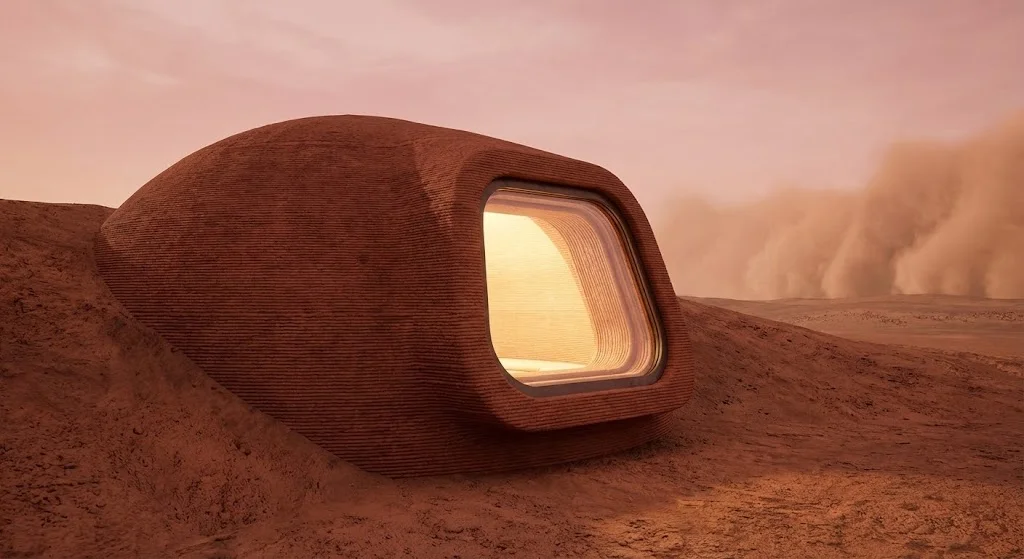
ISRU SINTERED REGOLITH STRUCTURE — MARIUS HILLS DEPLOYMENT
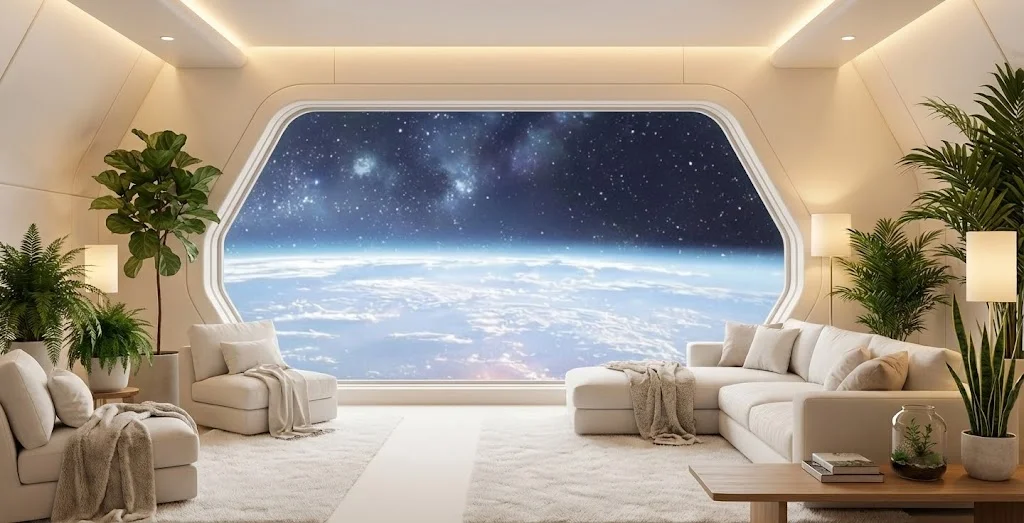
EXPANDABLE TENSILE PRESSURE VESSEL — TRANSIT CONFIGURATION
The Moon is not a rock. It is a gas station. Apollo failed to stay because they tried to live in camping tents. The Laks Doctrine: don't fight the sky. We don't build on the Moon. We build in the Moon.
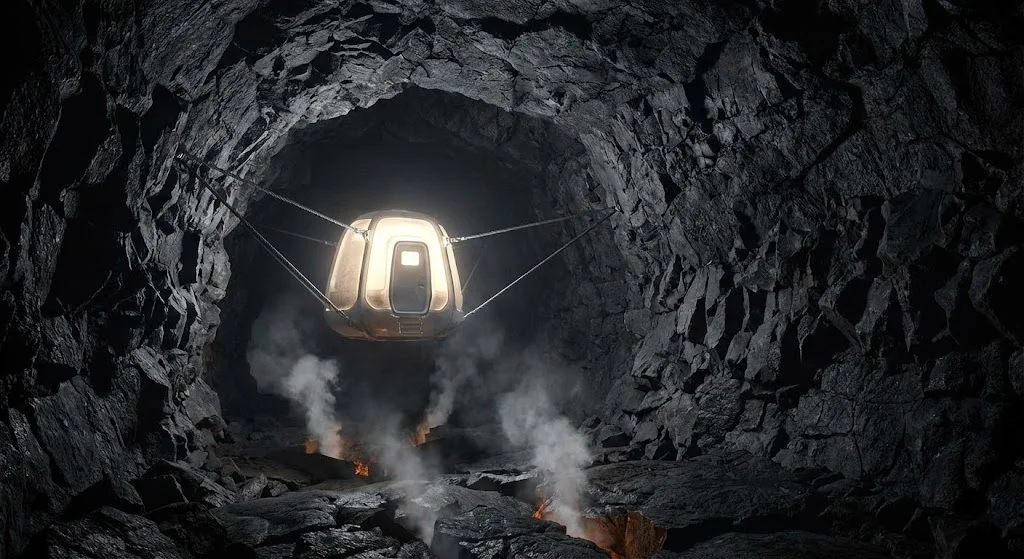
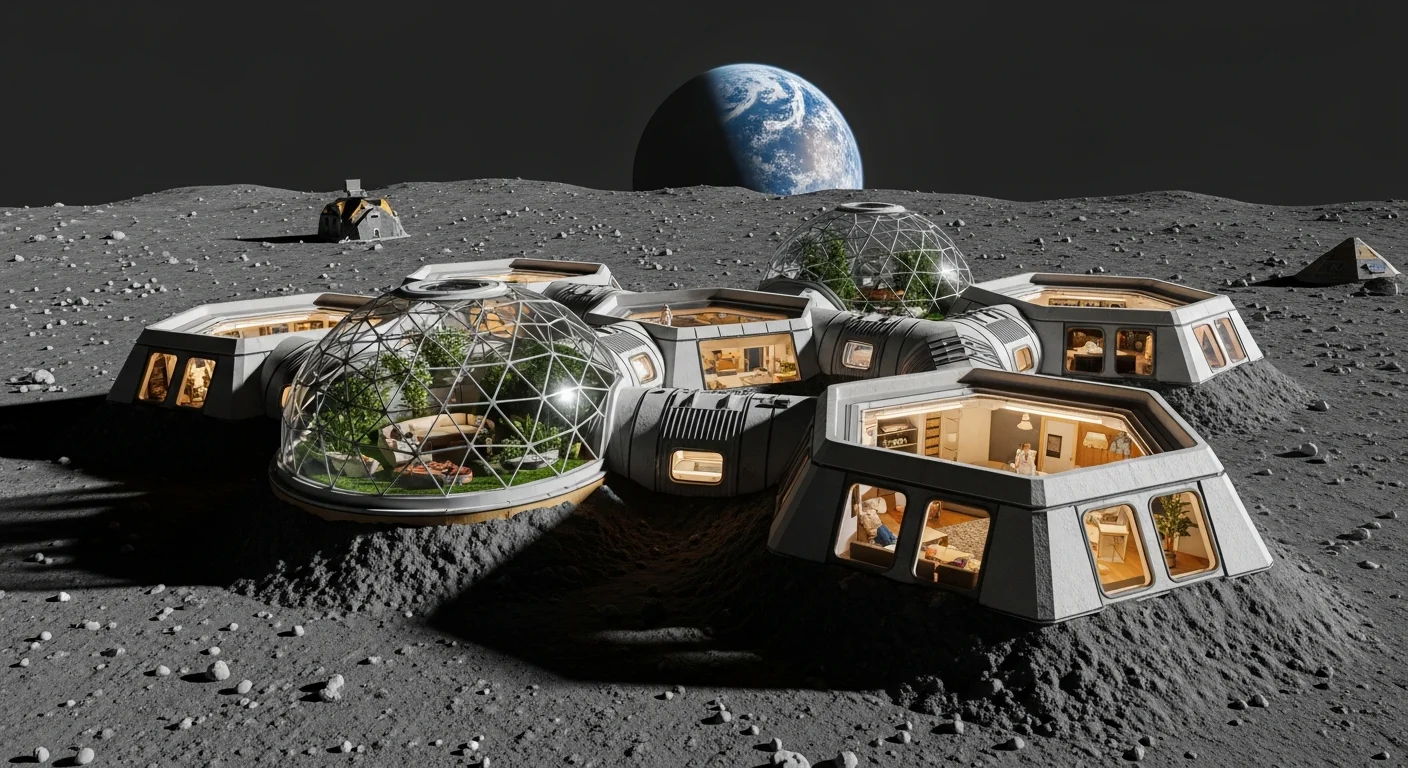
The Location: Marius Hills Lava Tubes. Billions of years ago, rivers of lava carved tunnels under the crust—some 1 km wide, large enough for Philadelphia. Temperature: constant −20°C (manageable). Radiation: zero (50 m of basalt overhead). Micrometeoroids: zero. We are not building a base. We are pressurizing a cave.
The Basalt Hive
Foundation Kinetics "Weaver" bots descend through a skylight and seal it with Laks-Flex Kevlar-Aerogel plug. A massive Metallic Sciences titanium iris becomes the only door. Maxwell "Geo-Collimator" lasers sweep the interior walls, melting regolith into smooth obsidian-like glass—an airtight ceramic tube formed from the moon itself. No concrete required.
The ceiling glows with real sunlight: Metallic Sciences mirror arrays on the surface track the sun, beam it down through fiber optics and Maxwell Soliton Blocks. We can focus it to grow crops or diffuse it to simulate a cloudy day on Earth.
The Silica-Works
The lunar dirt is soaked in He-3 blown there by solar wind for 4 billion years. Foundation Kinetics "Harvester" rovers heat the dust to 600°C. The gas boils off. We capture it. One shuttle load powers the USA for a year.
Moon dust is 45% oxygen bound in silica/iron oxides. Molten Salt Electrolysis splits it: oxygen for breathing and rocket oxidizer, waste metals (iron, aluminum, titanium) for Metallic Sciences to print more rovers. We don't import air. We mine it.
A 20 km Highfield Linear Accelerator (railgun) laid flat on the surface. Load a He-3 canister. Accelerate to 2.38 km/s (lunar escape velocity). A net in Earth orbit catches it. Export fuel for $0.00/kg shipping. Power cost: solar (free).
Life support is a closed circle. Ice mined from Shackleton Crater runs through Oasis-Metro units at 100% recycling. Electrostatic Highfield fields repel the razor-sharp lunar dust from every suit and airlock. Cellular Foundry algae vats line the cave walls, scrubbing CO₂ and producing protein paste that MK-Chef turns into "Moon Steaks." Transport: Lorentz "Lunar Mule" spider-landers run sub-orbital hops on locally-mined aluminum-oxygen fuel.
Selene Colony Tiers
Research: Population 50. Single sealed lava tube. Mining & geology focus. Solar + battery power.
Industrial: Population 500. Multiple connected tubes. Mass Driver operational. He-3 export & ship refueling. Stellar Furnace Tier 1 nuclear power.
Civilization: Population 10,000+. Pressurized underground city—parks, lakes, schools. Highfield Centrifuge Trains provide 1G gyms to prevent bone loss. Antimatter Ignition power. Sovereignty.
The psychology: Maxwell Canvas ceiling projects blue sky with moving clouds. "Earth Sounds" pump wind, rain, birdsong into the silence. Every room has a Cellular Foundry plant wall. The smell of wet dirt is the ultimate luxury.
10 // PROJECT GEO-CORE: THE GRANITE THRONE
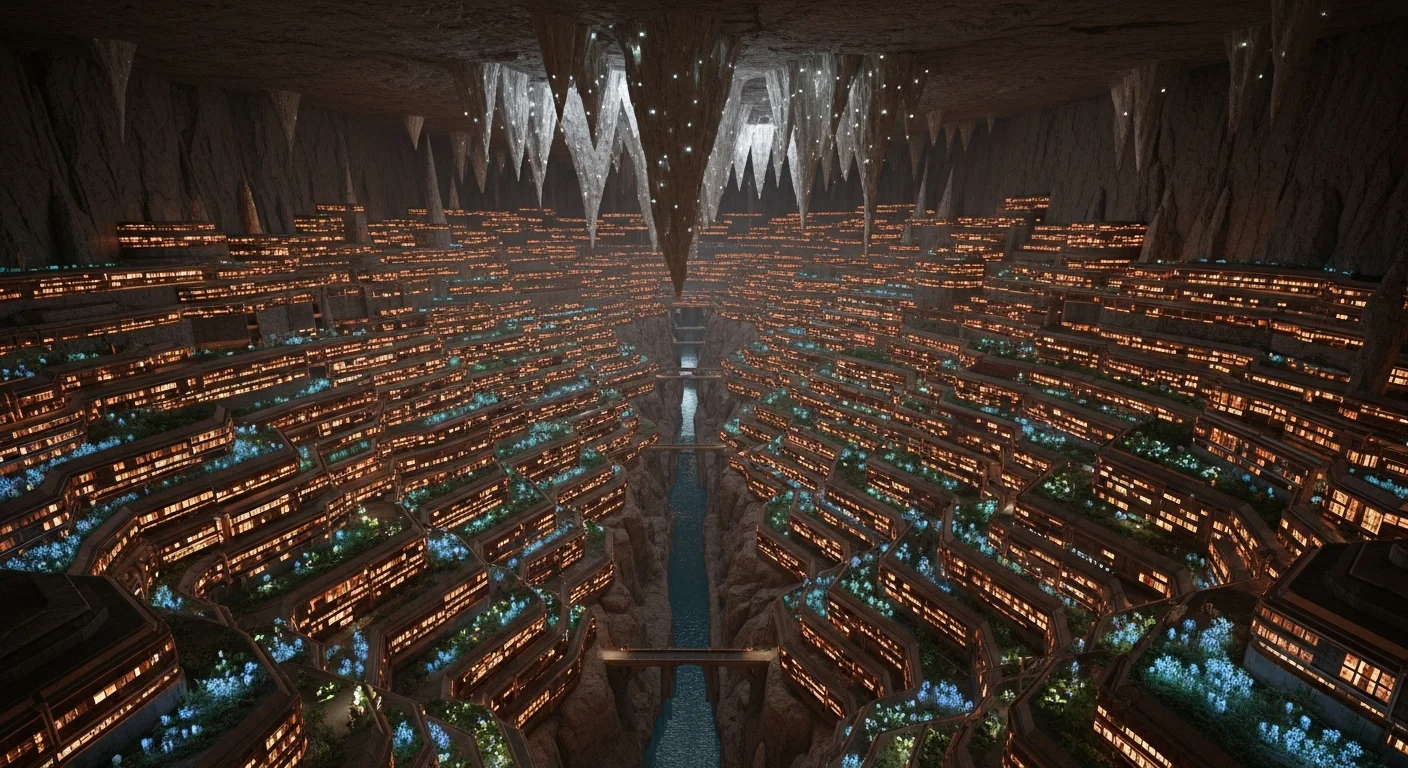
1 KM³ VOID ARCHITECTURE — INVERTED PYRAMID CROSS-SECTION
A wall can be breached. A bunker can be bombed. But a mountain is forever. Granite blocks radiation. It ignores nuclear weapons. It laughs at earthquakes. We are carving a 1 km³ void inside a peak and filling it with civilization.
The Canvas: Selecting the Perfect Rock
The integrity of the city depends entirely on the medium in which it is carved. You are not building on the ground; the ground is your building. We require "competent rock"—unweathered granite or gneiss with a Rock Quality Designation above 95%. Granite is igneous, isotropic (uniform in all directions), and massive (no internal layering). Compressive strength exceeds 200 MPa. We avoid sedimentary rock—limestone dissolves in water, sandstone crumbles under load. The mountain profile must be a broad massif, not a sharp peak. Sharp peaks create tension where gravity pulls the sides outward. A dome-like massif keeps the rock in compression, which rock handles best.
Primary Site: Jotunheimen Massif, Norway (61°N, 8°E). The Fennoscandian Shield has been tectonically dead for over a billion years. The rock is not just granite—it is gabbro and gneiss, denser and tougher than granite, impermeable to water. Seismic activity: virtually zero. Galdhøpiggen (2,469 m) offers over 1,500 m of vertical relief, providing 2,000 m of solid rock overhead—double the protection of Cheyenne Mountain. Norway is hydro-rich (glaciers, lakes, gravity-fed power), possesses the world's most advanced tunneling expertise (Lærdal Tunnel), and maintains a stable rock temperature of ~15°C at depth. The "Honeycomb" architecture uses 10 parallel halls, each 50 m wide, 100 m tall, and 1 km long, separated by 50 m granite pillars, with cross-tunnels every 100 m creating a walkable city grid. Total usable volume: 50 million m³—roughly 50 Empire State Buildings of internal space.
The Excavation: "The Vapor-Bore"
We don't use explosives (too messy) or drills (too slow). Maxwell "Geo-Collimator" lasers hit the rock face with nanosecond thermal pulses at 1,000°C. The surface spalls—explodes into dust without cracking the surrounding mass. Advance rate: 50 m diameter tunnel at 10 m/hour. Highfield magnetic coils ionize the dust and create a Mass Driver "Dust-River" that sucks it out at 200 mph. Foundation Kinetics robots spray molten Laks-Alloy onto the raw granite as fast as it's cut, sealing and pressurizing the rock face instantly. The mountain becomes a pressure vessel.
The Architecture: "The Inverted Pyramid"
A cubic kilometer is massive. Hollow it carelessly and the roof collapses. We build the "V"—an inverted pyramid that distributes load downward. A central spire runs peak to floor, holding the roof and housing the Stellar Furnace Tier 2 reactor and Lorentz vertical elevators. City blocks are carved as terraces into the walls, every unit overlooking the central void. The look: the Grand Canyon, but the walls are lined with luxury apartments, hanging gardens, and glowing markets. The raw granite is faced with white ceramic (Matter Kitchen silica processing)—clean, reflective, turning the cave into a temple.
The False Sky
The danger of underground living is claustrophobia. We trick the brain. The ceiling, 1 km overhead, is a solid array of Maxwell Micro-LED / Holographic Emitters projecting a perfect sky—moving clouds, the sun crossing the heavens, stars at night—at exact surface lux and color temperature. Your skin makes Vitamin D. Your circadian rhythm stays synced.
Because the space is 1 km tall, it has its own weather. Water vapor condenses into real clouds inside the mountain. When you look across the void to the other side of the city, the view is slightly hazy—atmospheric perspective that tells your brain: this place is huge. You are not trapped.
Infrastructure
WATER: Glacial meltwater filters through 2 km of granite (natural purification) to Oasis-Metro units. The cube floor is a massive lake—thermal battery, recreational beach, and reactor coolant.
POWER: Stellar Furnace "Lantern" Class fusion reactor at the bottom of the lake. Waste heat warms the city.
ACCESS: Highfield H-LEV vertical shaft from sea level. The pod accelerates to Mach 1 through solid rock. 40 seconds to city center. Lorentz hangar opens Thunderbirds-style in the mountain face. Maxwell H-Array fries unauthorized aircraft at 5 km range.
The Aerie: Mountain Hangar
Carved into a sheer granite cliff face 200 m below the peak—clean approach, no updrafts, no tree line. The portal: split-biparting blast sliders, two concrete-filled steel slabs each 25 m wide × 15 m tall × 2 m thick (~3,000 tons per door), hydraulically actuated on maglev rails. Exterior texturized with sprayed concrete to match surrounding granite; when closed, the seam is invisible from 1 km.
The landing deck is not solid—it is a heavy-duty steel mesh grid over a dump plenum vented to the mountainside. Rotor downwash passes through the floor and exhausts laterally, preventing the "vortex of death" recirculation that crashes helicopters in confined spaces. After touchdown, the turntable rotates 180° and slides on rails through a secondary blast door into the climate-controlled main hangar. Primary vehicle: Leonardo AW609 Tiltrotor—cruises at 500 km/h (twice helicopter speed), 1,400 km range (Oslo direct in 45 minutes), pressurized cabin at 25,000 ft. No exposed rotor blades. An air curtain separates the hangar from living quarters, ensuring zero exhaust penetration.
Geo-Core Product Tiers
Data & Gold: 100 m cube. Central banks, Aetheric server farms. Air-gapped: data enters via Maxwell laser link through a vacuum gap. If breached, the vault floods with Foundation Kinetics Smart-Concrete that hardens instantly, entombing the contents forever.
Survival: 500 m cube. DNA bank of every species (Cellular Foundry). Matter Kitchen nutrient paste for 1,000 people for 100 years. Luxury hotel meets nuclear submarine.
City-State: 1 km cube, full scale. Population 50,000. Central spire wrapped in hanging forest with 1 km waterfalls cascading into the lake. A society that lives inside a diamond. Perfect weather. Perfect safety. Perfect silence.
11 // INTEGRATION: THE CLOSED LOOP
The human buys the House. The House buys the Power (Stellar Furnace). The House buys the Food (Matter Kitchen). The House buys the Medical (Cellular Foundry / Brainwave Systems). The House buys the Transport (Lorentz Aerospace). We do not just own the technology. We own the Lifestyle.
- [REF-01] Syntactic Metal Matrix Composites for Deep Ocean Applications. Gupta, N., et al. JOM 68. (2016). [Aqualis Hull Technology].
- [REF-02] TransHab Concept: An Inflatable Habitat for Transit to Mars. Kennedy, K. NASA Technical Report. (1999). [Selene Soft-Goods Design].
- [REF-03] Underground Space Design: A Guide to Subsurface Utilization. Carmody, J., Sterling, R. (1993). [Geo-Core Fundamentals].
- [REF-04] Closed-loop Life Support Systems for Long-duration Missions. Verseux, C. Frontiers in Astronomy and Space Sciences. (2020). [ECLSS Design].
- [REF-05] Biorock Accretion: Electrochemical Mineral Deposition for Reef Restoration. Goreau, T. J. et al. (2012). [Aqualis Reef Healer Substrate].
- [REF-06] Thermal Spallation Drilling for Deep Borehole Applications. Potter, R. M. et al. Sandia National Laboratories. (2010). [Vapor-Bore Laser Excavation].
- [REF-07] Lunar Lava Tubes: Morphology to Habitability. Blair, D. M. et al. Icarus. (2017). [Selene Tube Architecture].
- [REF-08] Electromagnetic Launch of Lunar Material. O'Neill, G. K. MIT Press. (1977). [Mass Driver Theory].
Research Repository
Habitation engineering across all pressure regimes—from ocean floor to deep space.
Modular Habitats is the adaptive architecture arm of Laks Industries, engineering life-support structures for any environment humans wish to inhabit. Research spans inflatable soft-goods for orbital deployment, ISRU regolith construction for planetary surfaces, closed-loop bioregenerative ECLSS, radiation shielding for deep-space transit, and saturation physiology for undersea habitation. The division integrates technologies from every Laks subsidiary into unified habitat systems rated from 1,000 atmospheres of ocean pressure to the hard vacuum of orbit.
- Overview of NASA Environmental Control and Life Support Systems — NASA Technical Reports, 2010
- Assessment of Physical and Psychological Aspects of ISS Life Support for Sustainable Space Exploration — Frontiers in Space Technologies, 2024
- Designing Sustainable Built Environments for Mars Habitation — ScienceDirect, 2024
- Mars Surface Habitat Concept Design — NASA Technical Reports, 2023
- Recent Advances in Polymer-Based Materials for Space Radiation Shielding — PMC, 2024
- Performances of Kevlar and Polyethylene as Radiation Shielding on the ISS — Scientific Reports, 2017
- Stoichiometric Model of a Fully Closed Bioregenerative Life Support System for Long-Duration Missions — Frontiers in Astronomy and Space Sciences, 2023
- Plant and Microbial Science as Cornerstones to Bioregenerative Life Support Systems in Space — npj Microgravity, 2023
- Review of Habitable Softgoods Inflatable Design, Analysis, Testing, and Potential Space Applications — NASA, 2019
- In-Situ Utilization of Regolith Resource and Additive Manufacturing for Lunar/Martian Habitats — ScienceDirect, 2022
- Human Adaptations to Multiday Saturation on NASA NEEMO — Frontiers in Physiology, 2021
- Space Radiation: The Number One Risk to Astronaut Health Beyond Low Earth Orbit — PMC, 2014
- [DR-01] Hybrid Power Systems and Fuel Cell Integration in Distributed Generation. Larminie, J. & Dicks, A. Fuel Cell Systems Explained, 2nd ed., Wiley (2003). [link]
- [DR-02] Solid Oxide Fuel Cell Systems for Residential and Distributed Power Generation. Singhal, S.C. & Kendall, K. (eds.) High-Temperature Solid Oxide Fuel Cells: Fundamentals, Design and Applications, Elsevier (2003). [link]
- [DR-03] Power Management and Battery Buffering in Hybrid Energy Systems. Dufo-López, R. & Bernal-Agustín, J.L. Renewable Energy, 31(12), 2050-2073 (2006). [link]
- [DR-04] Efficiency of Fuel Cell Systems at Part-Load Operating Conditions. Braun, R.J., Klein, S.A. & Reindl, D.T. Journal of Power Sources, 158(2), 1250-1265 (2006). [link]
- [DR-05] Load-Leveling and Transient Response in Hybrid Renewable Energy Systems. Notton, G., Voyant, C., Fouilloy, A. & Nivet, M.L. Applied Energy, 88(4), 1254-1267 (2011). [link]